
Tongue-tie & lip-tie release · Frisco, TX
Gentle tongue-tie care for babies & kids
Painful nursing, a shallow latch, clicking while feeding, or a child who can't move their tongue freely? Our board-certified pediatric dentists look at how your child feeds, speaks and breathes first. When a release will help, we perform a quick CO2 laser frenectomy and guide you before and after.
Talk to our team about an evaluation. After hours, our line still connects you to someone on our team.
- Board-certified pediatric dentists
- CO2 laser frenectomy
- Newborns to teens
- Serving Frisco families since 2018

Does this sound familiar?
Signs of a tongue or lip tie
Ties show up differently at every age, and they affect nursing parents too. Pick the one that fits your family.
- Trouble latching, or slips off the breast easily
- Clicking or smacking noises while feeding
- Long feedings, or slow or poor weight gain
- Milk dribbling out of the mouth while eating
- Choking on milk or gasping for air while nursing
- Reflux or spitting up often
- Very gassy, colicky or fussy from swallowing air
- Can't hold a pacifier or bottle, gums or chews the nipple
- Pain while nursing that doesn't ease up
- Creased, flattened or blanched nipples after feeding
- Cracked, blistered or bleeding nipples
- Plugged ducts, thrush or mastitis
- Low milk supply
- Exhaustion from constant, inefficient feedings
- Speech that's hard to understand, or a speech delay
- Can't stick the tongue out, lick, or move it freely
- Slow or picky eater, especially with textures like meat
- Choking or gagging on drinks or food, or packing food in the cheeks
- Mouth breathing, snoring or sleeping with the mouth open
- Restless sleep or grinding teeth at night
- Crowded teeth or a high, narrow palate
- A gap between the top front teeth
Noticing a few of these? That doesn't always mean a tie, but it's worth a look. Call and we'll help you decide on next steps.
Download our Tongue Restriction Questionnaire (PDF)The basics
What is a tongue tie or lip tie?
Everyone has a small band of tissue, called a frenulum, under the tongue and inside the upper lip. When it's too short, tight or thick, it limits movement. That's a tie, and it's present from birth.
Tongue tie
Also called ankyloglossiaThe band under the tongue holds it down to the floor of the mouth. The tongue can't lift, stretch or move side to side the way it needs to for feeding, swallowing and, later, speech.
Lip tie
Upper lip frenulumThe band between the upper lip and gum is tight or thick, so the lip can't flange out to seal around the breast or bottle. Later it can be linked to a gap between the front teeth.
A tie is about function, not just how it looks. Some ties never cause a problem. That's why we evaluate how your child feeds, moves and grows before recommending anything, and we don't rush into a procedure that isn't needed.
Why parents choose a release
What a release can help with
When a tie is the cause, freeing the tongue or lip can make everyday things easier. Every child is different, and we'll talk honestly about what to expect for yours.
Easier, more efficient feeding
A better latch and seal on the breast or bottle, with fewer clicks, less air and shorter feeds.
Better weight gain
Taking in more milk with less struggle means more calories and, often, more rest for everyone.
More comfortable nursing
Less pain and nipple damage, and a better chance of reaching your own feeding goals.
Clearer speech
More tongue freedom can support certain sounds, often alongside speech therapy.
Easier eating
Chewing, moving food around the mouth and swallowing can all take less effort.
Healthy oral development
Good tongue posture and lip movement support how the mouth, teeth and airway grow.
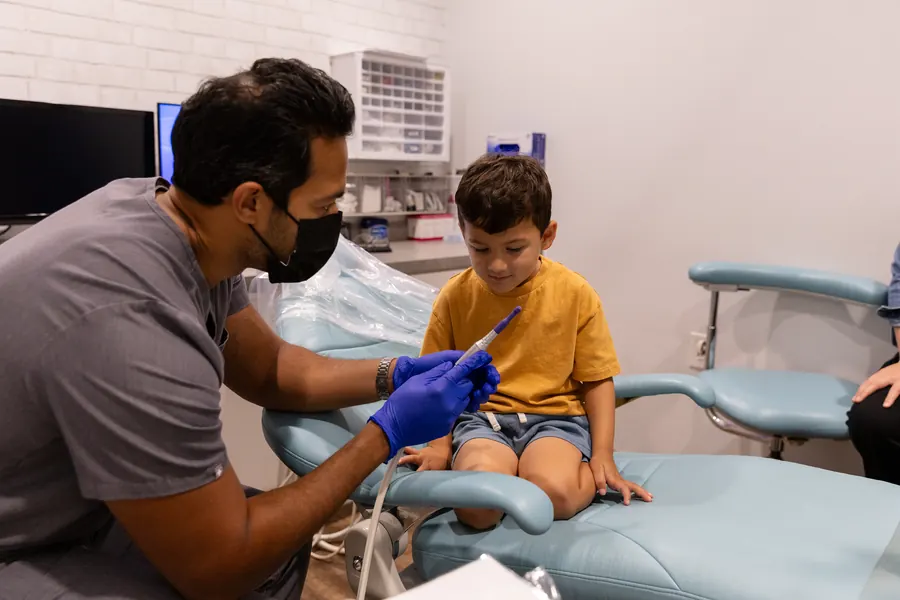
Our approach
Function first, and a team around your child
A release on its own isn't the whole answer. Tongue-tied babies and kids often do best with help from more than one specialist, and the care before and after the procedure matters as much as the procedure day.
The pre and post-surgery guidance you, as a parent, receive dictates the results your baby or child experiences.Dr. Abhishek Bhaumik
- Lactation specialistsYour IBCLC or midwife helps find out why feeding isn't working and supports latch before and after the release.
- Bodywork specialistsInfant chiropractic, craniosacral therapy or myofascial release can ease tightness elsewhere in the body.
- Feeding, speech & airway specialistsSpeech-language pathologists, myofunctional therapists, orthodontists and ENTs help with eating, speaking and breathing.
Step by step
What to expect
From your first call to your follow-up visits, here's how it works, so nothing on the day is a surprise.
Call us
Tell us what you're noticing with feeding, speech or eating. We'll answer your questions and set up an evaluation. Referrals from your pediatrician or lactation consultant are welcome, but you can call us directly.
A careful evaluation
Dr. Bhaumik or Dr. Mila checks the tongue and lip, how they move, and how feeding, eating or speech is going. Bring our questionnaire filled in if you can. Then we explain what we see and your options, including when a release isn't the right step.
Getting ready
If a release makes sense, we may suggest working with a lactation consultant, bodywork provider or feeding therapist beforehand, so your child gets the most out of it.
Procedure day
Most releases use a CO2 soft-tissue laser for precision and less bleeding, with about 5 minutes of working time under the laser. Some patients do better with a frenuloplasty, where the area is closed with a few small stitches. We'll tell you which one fits your child ahead of time.
For infants
- You bring your baby in, swaddle them and ask any last questions.
- Dr. Bhaumik and 2–3 assistants perform the release while you wait in the lobby or watch through the window.
- Then you feed your baby by breast or bottle in privacy.
For children & teens
- Parents are welcome to stay and watch.
- We use topical numbing gel, and sometimes local anesthetic depending on how thick the tissue is.
- If you get anxious at the dentist, it's fine to wait outside.
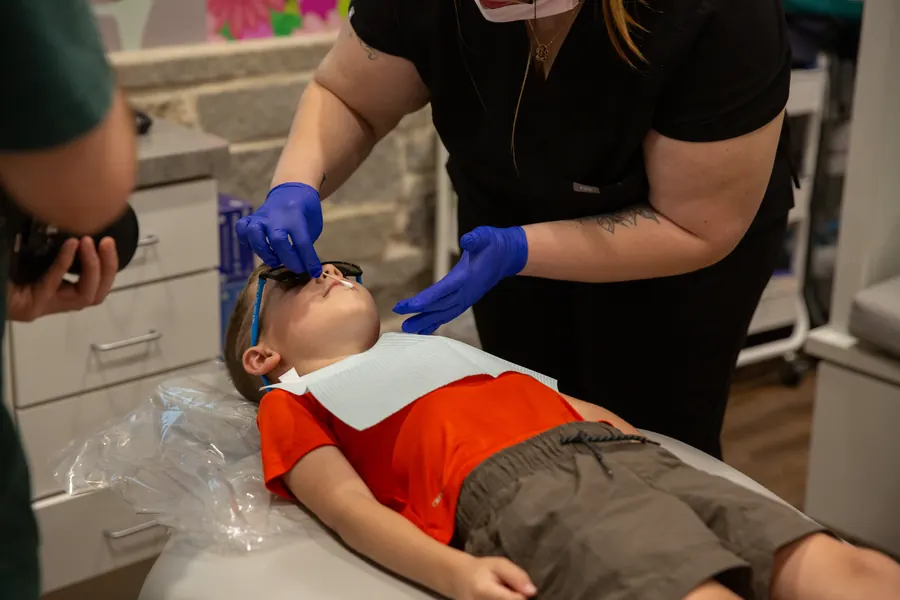
Safe, calm and quickEveryone wears protective glasses during the laser, and our team keeps your child comfortable and supported the whole time.
Before you go home
Our team walks you through wound care and the gentle stretching exercises you'll do at home, and answers every question. Dr. Bhaumik calls you the evening of the procedure.
Follow-up visits
We see you again to check healing and how feeding or function is improving, and we keep working with your other specialists.
After the release
Healing and recovery
Recovery is usually quick. Here's what's normal, so you know what you're looking at.
- Your child may be fussier or sleepier than usual and want to be held.
- Some babies resist nursing for a day or two. This is temporary.
- Nursing or a bottle helps calm them. Only give medicine with the exact dose Dr. Bhaumik gives you.
- After a lip release, any slight swelling under the nose goes away in a day or so.
- A white diamond or triangle under the lip, or a white line under the tongue, is normal.
- It usually lasts 7–14 days. The mouth doesn't form a dry scab like skin does.
- Keep up the wound care stretches. They're key to keeping the new range of motion.
- Pain medicine usually isn't needed after the first 36–48 hours.
- Feeding often becomes more efficient and less frequent, with more rest for both of you.
- Not every baby improves right away. Keep working with your IBCLC.
- Older kids may get exercises or therapy to build new speech and eating habits.
- Follow-up visits make sure healing and function are on track.
Worried about something you see during healing? Call us any time. You won't be bothering us, and we'd rather you ask.
Call (469) 384-8130
Real results
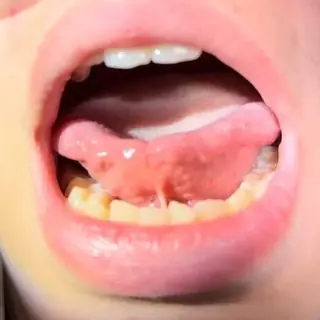
Before & after a release
Photos of Stonebrook patients from our before & after gallery. See how much more freely the tongue moves once the tie is released.
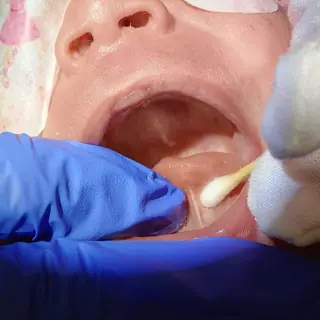 Before
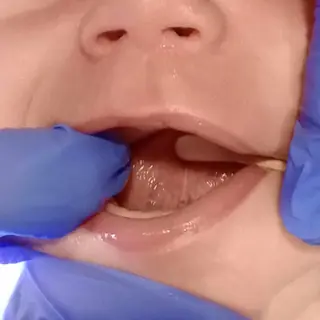 1 month after
 Before
 1 week after



Your doctors
Board-certified pediatric dentists
Specialty training means care built around infants, children, teens and patients with special needs, in a castle-themed office with soft lighting that helps kids and parents feel calm.
Dr. Abhishek Bhaumik
Board-certified pediatric dentist · FounderDr. Bhaumik opened Stonebrook Pediatric Dentistry with his wife, Elisa, in the summer of 2018, after practicing throughout Dallas. He leads our function and collaboration driven approach to tongue and lip ties and performs CO2 laser frenectomies alongside the families' other specialists.
Parents often tell us he's patient, thorough and conservative: he explains everything before, during and after.
Dr. Mila Belgrade
Board-certified pediatric dentistDr. Mila specializes in caring for infants, children, adolescents and patients with special needs. She is passionate about making every visit positive and fun, building lasting memories and a relationship of trust.
She evaluates and treats lip and tongue ties with the same careful, family-first approach.
Tongue-tie families
What parents say
We had a great experience! Our 2 month old had a lip and tongue tie. She received a thorough evaluation and successful procedures. We greatly appreciated follow-up visits, so we could ask questions and receive feedback.
He was kind and patient as he explained what we can expect before, during and after the procedure. Everything went so smoothly and my son is nursing better and looks so much more comfortable and relaxed.
The staff and Dr. B were very thorough and caring. I was able to nurse my baby privately and comfortably after his procedure. The procedure was very quick, and my son's recovery was easy.
We came in with our then 2.5 month old for the lip and tongue tie procedure. It was fast and I felt that my baby was in good hands with them. Dr. B errs on the conservative side which I like!
We came to Dr. Bhaumik with our three week old daughter with a lip and tongue tie. The staff was very friendly and made us feel as comfortable as possible. Extremely impressed!
Dr. B walked my wife and I through the entire procedure, and explained all of the benefits, as well as options for treatment. I am blessed to have found Stonebrook Pediatric Dentistry and their awesome team!
Dentist was knowledgeable on tongue ties (main reason for my visit) and explained his recommendations. He spent extra time answering all my questions. Very happy!
Our 1 month old daughter needed frenectomies to nurse efficiently and properly develop orally. Dr. B was extremely friendly and explained everything clearly. Stellar people, the practice is above and beyond 5 stars.
It was one of the very few locations that offered the laser surgery. Dr. B was very knowledgeable and thorough explaining the procedure and next steps. We loved that first experience so much that we changed our pediatric dentist.
Insurance & payment
Care that fits your budget
We'll walk you through costs before anything is scheduled, so there are no surprises.
Dental insurance
Call us with your plan details and our team will help you understand your benefits.
In-house membership
No insurance? Our yearly membership plan includes savings on dental procedures.
Financing with CareCredit
Spread the cost of care into manageable monthly payments.
Questions parents ask
Frequently asked questions
Don't see your question? We're happy to talk it through on the phone.
Ask us on the phoneIs a tongue-tie or lip-tie release safe?
Yes. A frenectomy is a safe, routine procedure. We use a CO2 soft-tissue laser, which causes less bleeding and carries minimal risk of infection, and we follow strict sterilization protocols.
How long does the procedure take?
The working time under the laser is about 5 minutes. Plan for a longer visit so there's time for questions, the procedure, feeding afterward and going over the stretches you'll do at home.
Can I stay in the room with my baby?
For infants, you bring your baby into the room, swaddle them and ask any last questions. Then you wait in the lobby or watch through the treatment room window, because the procedure is quick and needs full focus. For children and teens, parents are welcome to stay and watch.
Will it hurt? What about pain medicine?
Most children have minimal discomfort. Babies can be fussier or sleepier for a day or two, and nursing or a bottle helps comfort them. Only give medicine with the exact dose Dr. Bhaumik gives you; he calls the evening of the procedure. After the first 36 to 48 hours, pain medicine usually isn't needed.
When will feeding get better?
Many babies feed more efficiently over the following days and weeks. Not every baby improves immediately, and some resist nursing for a day or two. Working with a lactation consultant (IBCLC) before and after the release makes a real difference.
Will my child need stitches?
It depends on the release. A CO2 laser frenectomy doesn't need stitches. For some patients a frenuloplasty is the better choice, and the area is closed with a few small stitches. We'll explain which one fits your child before the procedure.
Can a tongue tie or lip tie come back?
Ties usually don't come back after a frenectomy. Doing the wound care stretches as instructed is important, and some children also benefit from therapy such as speech or myofunctional therapy.
What ages do you treat?
We evaluate and treat tongue and lip ties from newborns through children and teens. For older children, we use topical numbing gel and sometimes local anesthetic, depending on the thickness of the tissue.
Do I need a referral?
Referrals from pediatricians, lactation consultants and other providers are welcome. If you're noticing signs of a tongue or lip tie, you can also call us directly at (469) 384-8130 to ask about an evaluation.